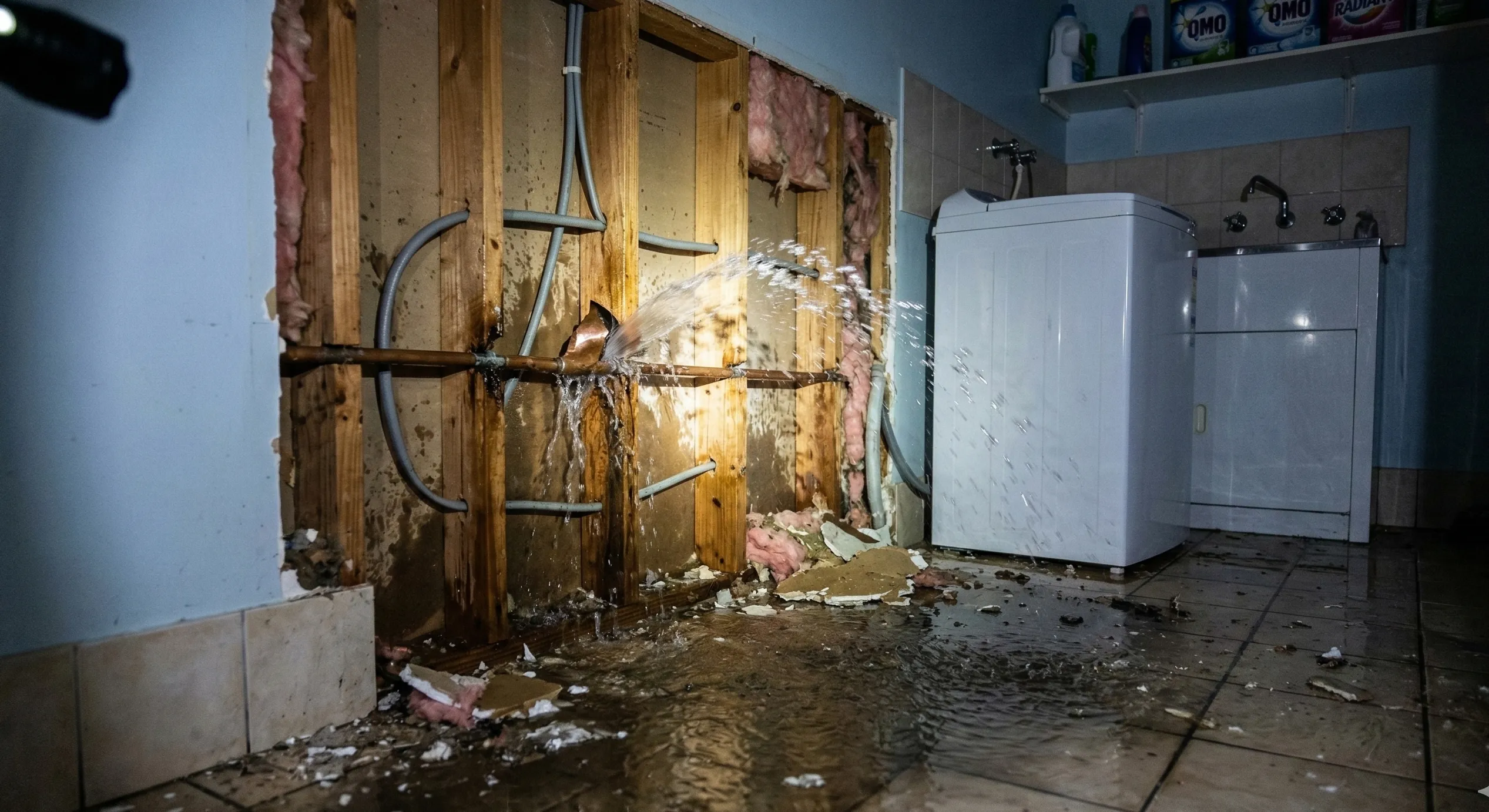
You’re woken by a sound that doesn’t belong. Rushing water, a loud crack, or a steady drip that’s far too heavy to be a leaky tap. You get up to investigate and find water spreading across the floor, pouring from a wall, or dripping through the ceiling.
A burst pipe is one of the most stressful plumbing emergencies a homeowner can face. It’s sudden, it’s messy, and it usually happens at the worst possible time. But the actions you take in the first 10 to 15 minutes, before the plumber arrives, can mean the difference between a manageable repair and thousands of dollars in water damage.
Here’s exactly what to do, step by step.
Step 1: Turn Off the Water Supply
This is the most important thing you can do. Every second the water keeps flowing, the damage gets worse.
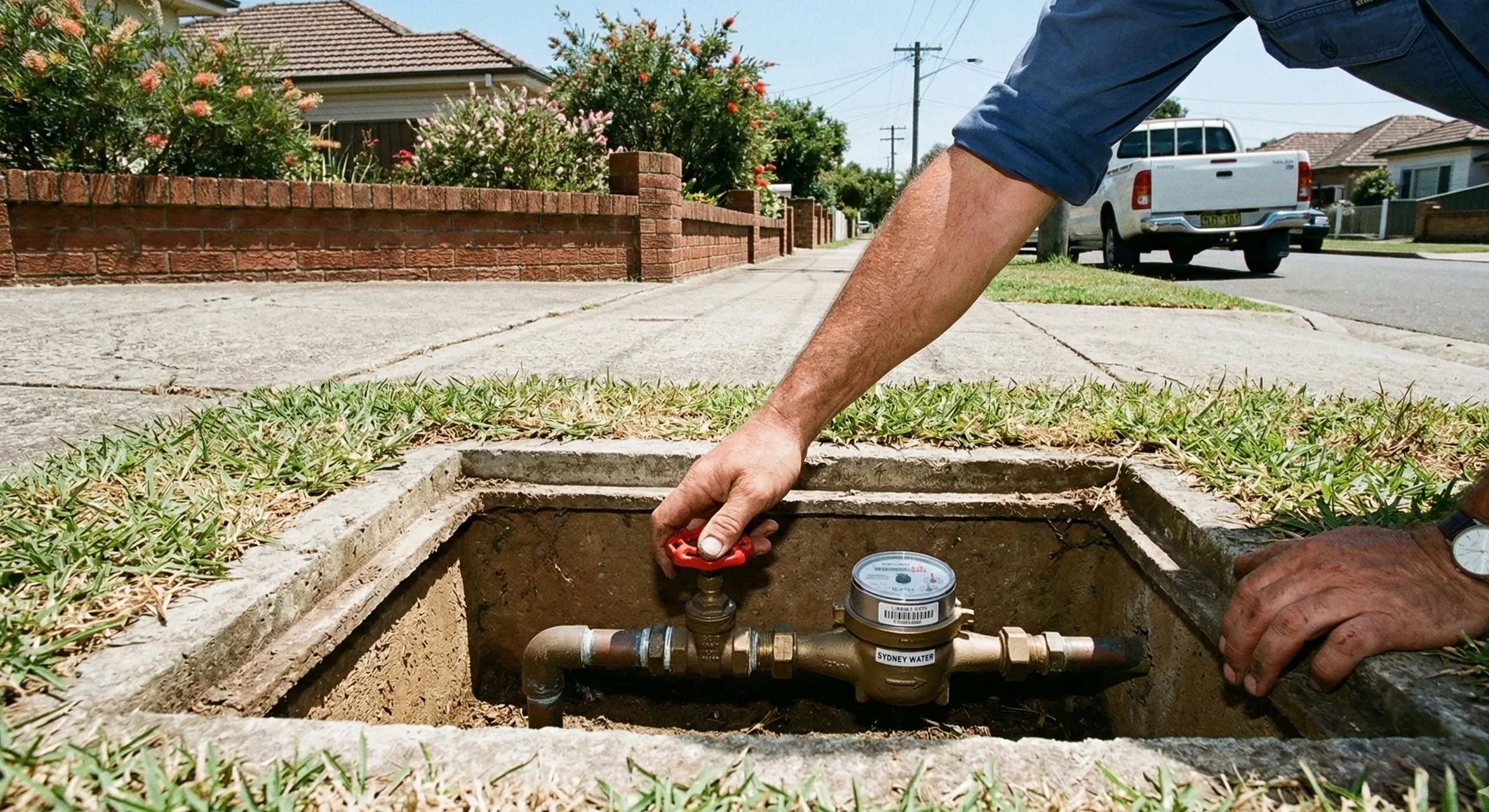
Find your main shut-off valve. In most Australian homes, this is located near the water meter at the front of the property, usually in a small covered pit near the footpath or boundary fence. The valve is typically a gate valve (round handle, turn clockwise) or a ball valve (lever handle, turn 90 degrees to shut off).
If you’re in an apartment, your isolation valve may be inside your unit. Common locations include the laundry cupboard, under the kitchen sink, or in a service riser accessible from a hallway cupboard. If you can’t find it, contact your building manager or body corporate emergency line.
Turn it off firmly but don’t force it. Shut-off valves that haven’t been touched in years can be stiff. Turn clockwise until it stops. If it won’t budge, don’t use excessive force or you risk breaking the valve and making things worse. Wrap a cloth around the handle for grip, or use an adjustable wrench gently.
Open a tap to drain residual pressure. Once the main valve is off, open a tap at the lowest point of your home (a garden tap or laundry tap works well). This relieves pressure in the system and helps stop water flowing from the burst.
Step 2: Turn Off the Electricity
Water and electricity are a dangerous combination. If water is anywhere near electrical outlets, your switchboard, light fittings, or appliances, turn off the power.
Access your switchboard and flip the main switch to off. If the switchboard is in a wet area or you’d need to step through standing water to reach it, don’t risk it. Call your electricity distributor’s emergency line and wait for them to make it safe.
Don’t touch electrical appliances that are sitting in or near water. Even turning off a power point while standing in water can be dangerous.
If the burst pipe is well away from any electrical fittings and the water hasn’t reached outlets or appliances, you may not need to kill the power entirely. Use your judgement, and when in doubt, switch it off.
Step 3: Contain and Minimise the Damage
With the water supply off and electricity safe, your next priority is limiting the impact on your home.
Mop up standing water as quickly as you can. Use towels, mops, and buckets. If you have a wet-dry vacuum, now is the time to use it. The faster you remove standing water, the less damage it does to floors, walls, and subfloors.
Move furniture and valuables out of the affected area. Timber furniture sitting in water will stain and warp. Electronics, documents, photo albums, and anything irreplaceable should be moved to a dry room.
Place buckets under active drips. If water is coming through the ceiling, put containers underneath to catch it. If the ceiling is visibly sagging or bulging with water, carefully poke a small hole in the lowest point with a screwdriver to let the water drain in a controlled way. This prevents the plasterboard from collapsing under the weight, which can cause far more damage.
Pull up rugs and floor coverings if they’re getting wet. Wet carpet on timber flooring traps moisture and accelerates damage to the boards underneath.
Open windows and doors to improve airflow and start the drying process. In humid climates, this is especially important. Trapped moisture leads to mould growth within 24 to 48 hours.
Step 4: Take Photos and Videos
Before you clean up too much, document the damage. Your insurance company will want evidence of the extent of the water damage, and it’s much easier to capture this while it’s fresh.
Photograph the source of the burst (or where the water is coming from), any standing water, damage to walls, ceilings, and floors, and any belongings that have been affected. Video is even better, as it gives a clearer picture of the scope than photos alone.
Keep notes on the time you discovered the burst and the steps you took. Insurers look favourably on homeowners who took reasonable steps to mitigate damage.
Step 5: Call an Emergency Plumber
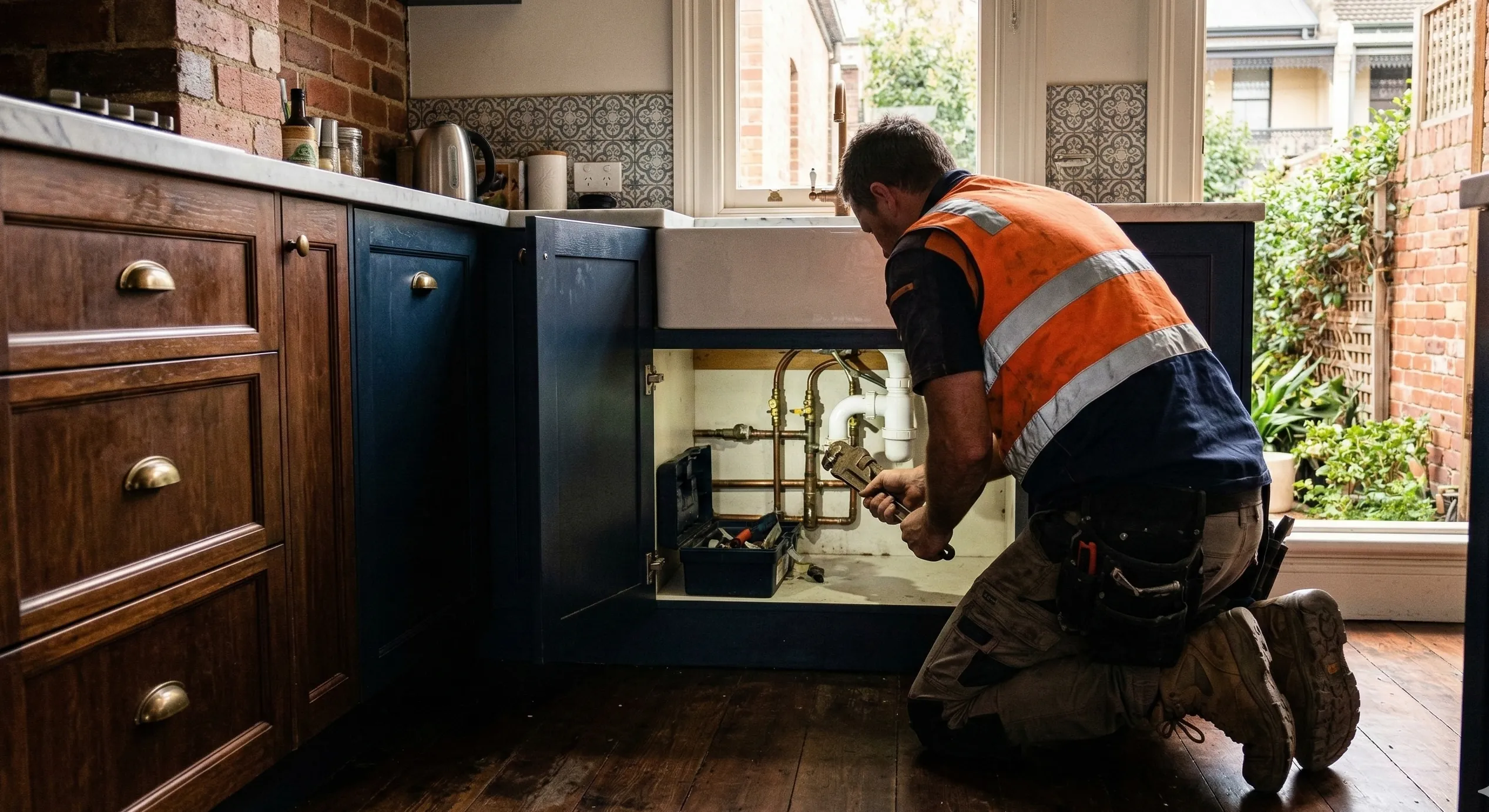
With the situation contained, it’s time to call a professional.
When you ring, be ready to tell the plumber what’s happened (as specifically as you can), whether you’ve been able to shut off the water, the location and type of property (house, unit, townhouse), and your address.
Most emergency plumbers in Australian metro areas aim for a response time of 30 to 90 minutes. During severe weather events or peak demand, it may take longer. Ask for an estimated arrival time when you call.
If you don’t already have a plumber you trust, you can search for emergency plumbers by location on Urgent Plumbers. Every listing is for a licensed plumber who services your area.
What Not to Do
In the stress of the moment, it’s easy to make mistakes that worsen the situation. Here are some things to avoid.
Don’t ignore it and go back to bed. Even a slow leak can cause significant structural damage overnight. Water spreads, seeps into subfloors, and wicks up through plasterboard and insulation. The longer it sits, the worse (and more expensive) the damage.
Don’t try to repair the pipe yourself. Temporary fixes like duct tape, hose clamps, or rubber patches might seem like a good idea, and in some cases they can slow a leak temporarily. But they’re not a substitute for a proper repair, and if they fail while you’re asleep, you’re back to square one. Shut off the water instead.
Don’t use electrical appliances in wet areas. No hairdryers aimed at wet walls, no extension cords running through puddles, no heaters placed near standing water. Dry the area manually and let airflow do the rest until the power situation is confirmed safe.
Don’t delay calling your insurer. Most home insurance policies require you to report damage promptly. Call your insurer as soon as practical (ideally the next morning) and provide the documentation you’ve collected.
Why Do Pipes Burst?
Understanding the cause can help you prevent it from happening again.
Corrosion. Older pipes, particularly galvanised steel, corrode from the inside over time, weakening the pipe wall until it gives way. This is common in Australian homes built before the 1980s.
High water pressure. Excessively high water pressure puts constant stress on pipes and fittings. If you notice loud banging when taps are turned off (water hammer), your pressure may be too high. A licensed plumber can test your pressure and install a pressure-limiting valve if needed.
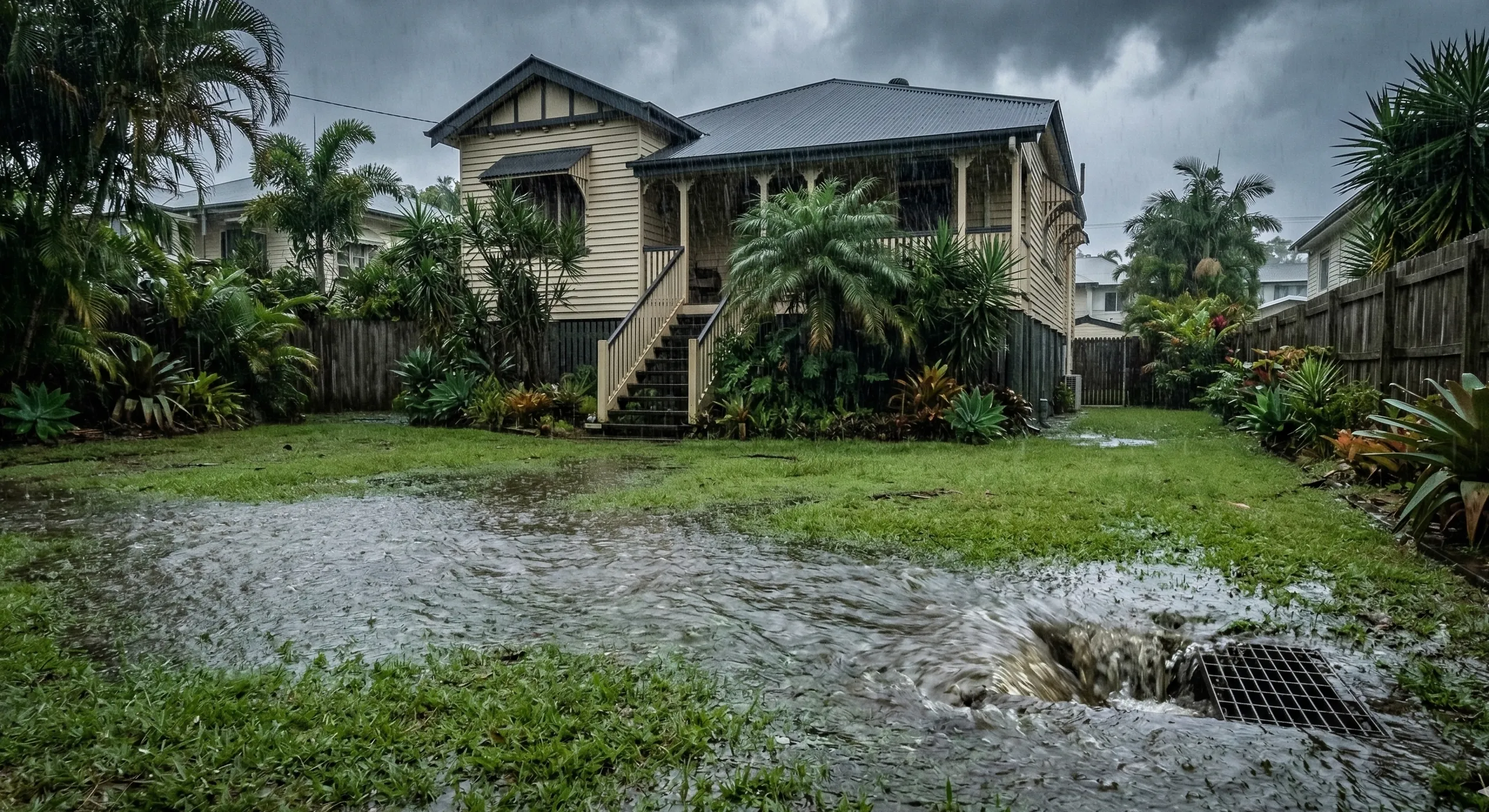
Tree root intrusion. Roots from nearby trees can grow into and around underground pipes, putting pressure on joints and eventually cracking the pipe. This is one of the most common causes of pipe failure in established Australian suburbs.
Temperature changes. While Australia doesn’t experience the severe pipe-freezing conditions of colder climates, significant overnight temperature drops (common in inland areas and southern states) can cause pipes to contract and weaken at joints over time.
Age. All pipes have a lifespan. Copper pipes typically last 50 to 70 years, galvanised steel 20 to 50 years, and modern PEX or PVC pipes 25 to 40+ years. If your home’s plumbing is approaching the end of its expected life, proactive replacement is far cheaper than emergency repairs.
Preparing for Next Time
Once the immediate crisis is resolved, take a few steps to protect yourself in the future.
Find and label your shut-off valves if you haven’t already. Make sure every adult in your household knows where they are and how to use them.
Save your plumber’s number. When you find a plumber you trust, keep their contact details in your phone. Searching for a plumber in a crisis is not when you want to be making that decision.
Ask your plumber about a maintenance inspection. After a burst pipe repair, it’s worth having the rest of your plumbing assessed, particularly if your home is older. A pipe that burst in one spot may have similar weaknesses elsewhere.
Review your insurance coverage. Make sure your home and contents policy covers water damage from burst pipes, and understand what’s included and excluded before you need to make a claim.
Find an Emergency Plumber Near You
A burst pipe is alarming, but it’s a problem with a solution. Shut off the water, stay safe, protect your home, and get professional help on the way. That’s the formula.